AI Automation Claude Brand Systems

Teaching AI to speak in brand

Reco's brand system, built into two Claude Skills that turn unbranded decks into on-brand drafts in minutes, with fresh layouts instead of swapped-in text.

All information shown here is public.
CompanyReco.ai
RoleSenior Digital Designer
ProgramAI Champions Program
Year2025–2026
Est. 40+ hrs
Estimated design hours saved per month across the team, about 2 hrs per deck
Built solo
Two Claude Skills engineered from scratch to carry Reco's brand system: Brand Skill + Design System for Assets
Beyond design
Teammates outside design used the skills too, and I saw the benefit first-hand while I was there
BEFOREAFTERBrand knowledge, encoded into a skill
The brand system

The system behind the skills

As Reco's sole brand design lead, I built and maintained the brand system the company used before its later rebrand. These two skills put that system in a form Claude could apply, so anyone on the team could get on-brand assets without waiting on design.

Color + logo
Brand colors and logo rules, so every output starts on-brand
Type + tone
Fonts and voice, drawn from the brand book and messaging guide
Layout rules
Layout and visual hierarchy, tested against real decks
Slide system
A reusable architecture Claude composes new layouts from, not a template
The Brand Guidelines page

Where the system lives

That system lives on a page I designed: Reco's single source of truth for logo, color, type, and illustration, with a PDF and media kit to download.
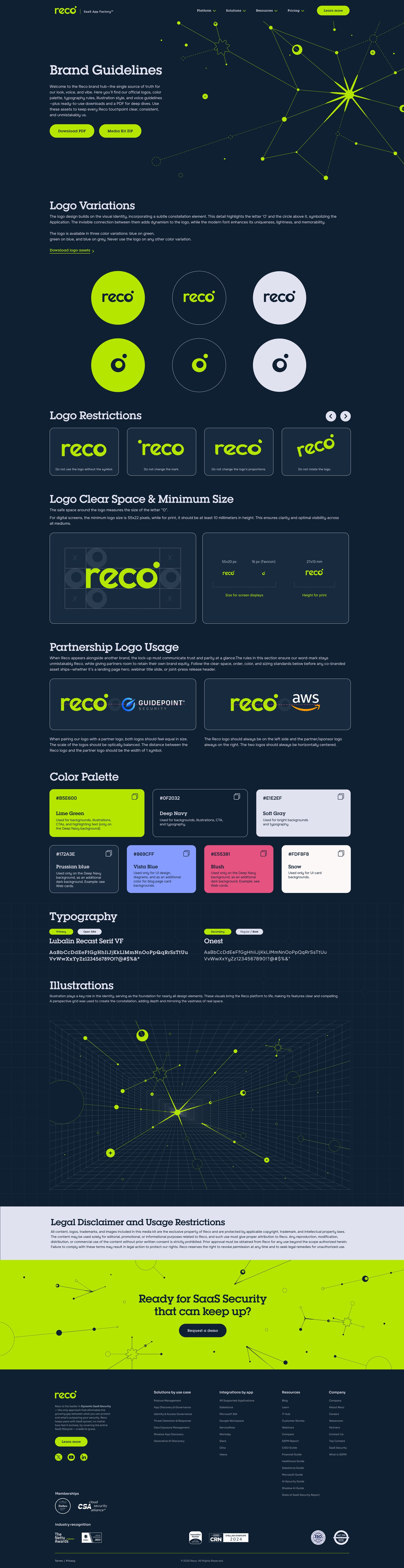
Reco Brand Guidelines page: logo variations and restrictions, clear space, partner logo usage, color palette, typography and illustration style

Scroll inside the frame to see the full page.

Logo rules
Three colorways, restrictions, clear space and minimum size, and partner lockups
Color
Seven colors, each with a stated role
Type
Lubalin Recast Serif VF paired with Onest
Illustration
The constellation style, with downloads for the PDF and media kit
The navigation

Navigation, redesigned

The main navigation got a redesign too, with a menu for each section.
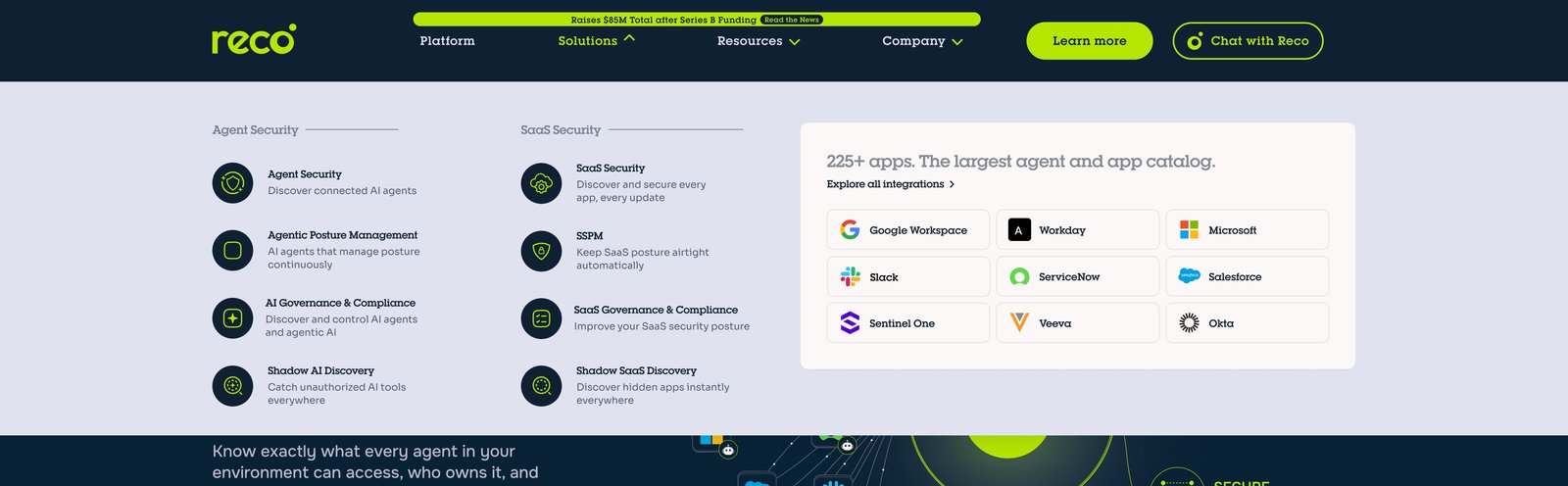
Reco navigation with the Solutions menu open

The Brand Guidelines page and the navigation, as I designed them while I was at Reco. Reco has since rebranded, and the current brand is not my work.

01 · Problem

A daily cost hiding in plain sight

"The goal: take unbranded decks and rebrand them into Reco style, including new visuals created from the content provided, without waiting on design."

Keeping presentation decks and collateral on-brand was always time-consuming. The effort varied with deck length, the number of visuals, and the design complexity required.

This wasn't a rare edge case. Rebrand requests came in daily across every department. Shifting priorities meant they queued behind other work. Longer turnarounds meant decks shipped off-brand or missed their window entirely.

The opportunity was clear: what if any team member could hand over an unbranded deck and get back a fully styled, visually polished presentation in minutes, not days?

1
Defining the brand context
Claude received the full Reco brand book, messaging guide, and dozens of before/after examples of collateral and decks as source material. The more context, the more consistent the output.
2
Authoring the first Claude Skill
Colors, logos, fonts, tone, and layout rules were encoded into the first Claude Skill through iterative refinement over two weeks, with outputs tested against real decks and adjusted until the brand felt right.
3
Engineering the Design System
Beyond simple text swaps, I built a reusable slide architecture Claude uses to generate entirely new on-brand layouts from raw content. Not a template: a layout system Claude composes from the content.
4
Testing on live requests
Every new request that came in, I ran through the skills and tracked how many rounds of iteration it took to reach on-brand output. That daily loop showed me exactly where it broke.
5
What went wrong, and the fix
Early runs cut off the logo, some graphics failed to render, and the skills reused graphics from their library instead of creating new ones. Their instructions kept getting refined until they analyzed the full content of each deck and generated new graphics from it.
6
The workflow
Hand over an unbranded deck, Claude rebrands it in Reco style with fresh visuals, and a quick human-in-the-loop designer review finishes the job. Hours of work, reduced to minutes.
02 · How I Built It

The brand system, encoded

03 · My Approach

Built to work with me

This project reflects how I think about AI as a design tool, not as a shortcut, but as infrastructure I build and shape to extend my own capabilities. The Reco Claude Skills didn't replace design judgment; they encoded it.

Every creative decision in those skills, the color logic, the layout rules, the visual hierarchy, came from design thinking first. AI is the layer that makes those decisions repeatable, scalable, and available to anyone on the team.

That's the pattern I bring to every workflow: understand the craft deeply, then build systems that carry it forward.

"I don't use AI to do my job. I use it to multiply what I can do, and I build the tools myself."

In practice
Day-to-day
AI as a creative collaborator
Briefing, brainstorming, copy iteration, layout exploration. AI accelerates the thinking, I direct the outcome.
System-building
AI as repeatable infrastructure
Skills, workflows, and prompts I engineer so good design decisions scale beyond a single project.
Approach A
Regular Claude
Places text within the existing template. No layout innovation. A direct copy-paste of content into the brand style.
Approach B
Claude Design
Builds entirely new layouts, turning plain slides into visually engaging, on-brand designs from the deck content itself.
Key Insight

Testing both approaches on the same deck made the difference obvious.

Claude Design was able to build upon the given content and create entirely new layouts, turning plain slides into visually engaging, on-brand designs. Regular Claude simply placed the text within the template and did not innovate. A light manual clean-up pass is still needed after each run.

04 · The Work

Real decks, transformed

Two real Reco decks put through the skills. Browse slide by slide and switch between the original and the AI-rebranded output.

05 · Brand System in Action

One system, every format

Beyond slide decks, the brand system extends to other formats. This HR Newsletter Builder was built for the People team: a brand-aligned starting point they can use without touching a design file, with a quick designer check before it goes out.

Phase Status What happened
Scoping Done Problem mapped. Use-case scorecard: Impact 5/5, Feasibility 3/5.
Map Done Use case identified: rebrand decks to Reco style. Daily task confirmed across teams.
Build Done Brand Skill + Design System built and tested. Approximately 2 weeks per skill.
Share Done Shared with the team. People used them. The skills shipped to real users.
Scale Done Team adoption was underway, and I was exploring HTML decks for a richer presentation experience.
06 · Milestone Journey

Map. Build. Share. Scale.

07 · Impact

Design that works even when I'm not there

The goal was never to build a tool for myself. It was to build something anyone on the team could use independently. Both skills shipped, were used by teammates beyond design, and ran in production while I was at Reco.

An estimated 40+ hours saved monthly
My estimate is roughly two hours saved per deck. The savings added up every month the skills were running.
Built and shipped solo
Two Claude Skills engineered from scratch: Brand Skill for decks and Design System for Assets. Both were live and in use while I was at Reco.
Used beyond design
Teammates outside the design team used the skills too, and brand consistency scaled without scaling headcount.
Brand that scales without me
Outputs start brand-aligned because the brand knowledge is built into the tool. A light designer review finishes the job, so the standard holds without me policing every slide.